
Sensate Focus: What It Is and How Couples Actually Use It
If you have ever read about sex therapy, you have probably come across the term sensate focus. It is one of the oldest and most widely used techniques in the field. It is also one of the most misunderstood.
SexualityExpert.com Editorial Team: general educational content for adult readers.

This article is general educational information only. It is not medical advice, not a diagnosis, and is not written by a doctor. This site is not a doctor and does not provide medical care. Nothing here is medical advice. Full disclaimer.
Sensate Focus: What It Is and How Couples Actually Use It
If you have ever read about sex therapy, you have probably come across the term sensate focus. It is one of the oldest and most widely used techniques in the field. It is also one of the most misunderstood. Some people think of it as a set of massage moves. Others assume it is only for couples in crisis.
At its heart, sensate focus is a structured way to take pressure off physical intimacy so that people can pay attention to touch again.
Where it came from
Sensate focus was developed by William Masters and Virginia Johnson, the researchers who ran a well known sex research program in St. Louis in the 1960s and 1970s. They described it in their 1970 book Human Sexual Inadequacy as part of a short, intensive treatment program for couples.
A 2016 review in the journal Sexual and Relationship Therapy, by Michelle Linschoten, Linda Weiner and Constance Avery-Clark, notes that Masters and Johnson's sensate focus techniques "have informed the sex therapy field for over four decades." Weiner and Avery-Clark both trained with the Masters and Johnson institute, so they write from close knowledge of the original intent.
The core idea: touch for its own sake
Many sexual difficulties are made worse by pressure. If you are anxious about whether you will get aroused, reach orgasm, keep an erection or please your partner, your attention goes to monitoring yourself rather than to what you are feeling. Masters and Johnson called this kind of self watching spectatoring.
Sensate focus tries to break that loop. Partners take turns touching each other with a simple instruction: notice the sensations. Not "try to get turned on," not "try to turn your partner on," but pay attention to temperature, texture and pressure as if you were curious about them. When the mind drifts toward judgment or goals, you gently bring it back to sensation.
One feature surprises people: in the early stages, intercourse and genital touch are usually off the table. That is deliberate. Removing the expectation of sex removes much of the pressure.
What the stages usually look like
Therapists vary in how they structure sensate focus, and it is usually adapted for each couple. The general pattern looks like this.
Stage one: non genital touch. Partners take turns touching each other's bodies, avoiding breasts and genitals. The person touching focuses on what they feel through their hands. The person being touched simply notices. Each turn might last a set time, and then roles switch.
Stage two: including genital touch. Once the first stage feels comfortable, touch can include breasts and genitals, still with the focus on sensation rather than arousal or orgasm.
Later stages: mutual touch and, eventually, intercourse. Partners may touch at the same time, and later, if it fits their goals, move gradually toward intercourse while keeping the same attitude of curiosity.
Couples usually do these sessions at home and then talk with a therapist about what came up. The talking is as important as the touching, because it is where people notice patterns of anxiety, avoidance or pressure.
Common misunderstandings
The 2016 review says one of the main problems with sensate focus is that "clear and detailed information about the underlying concepts, original intent, and specific implementation" was long limited to private presentations at professional meetings. The result, the authors argue, has been confusion. A few misunderstandings come up often:
- It is not a relaxation exercise. Feeling relaxed may happen, but the goal is attention to sensation, not calm.
- It is not about giving pleasure. The person touching is focused on their own experience of touching. This lifts the burden of performing for the partner.
- It is not a test. If arousal shows up, fine. If it does not, that is fine too. Neither outcome is success or failure.
- It is not only for heterosexual couples. The original research mostly involved married heterosexual couples, but the technique can be used by couples of any gender and orientation, and parts of it can be done alone.
What the research says
Sensate focus has been used for more than fifty years and is a standard part of sex therapy training. But the review is candid about the evidence. It says that applying sensate focus to diverse populations, and efficacy research on it, "has been limited." Much of the original work focused on physically able bodied, well educated heterosexual couples, and the authors call for more detailed research across different population groups.
In practice, sensate focus is usually one part of a broader treatment plan. A therapist might combine it with education, communication work, treatment of pain or medical care. It is best thought of as a well established tool rather than a cure on its own.
Trying the ideas at home
Some couples use the basic principles without formal therapy. If you want to experiment, a few guidelines help:
- Agree on the boundaries first. For example, decide that tonight is about touch only and sex is not on the menu. Stick to it.
- Take turns. One person touches, the other receives, then switch. Keep it simple.
- Focus on your own sensations. Whether you are touching or being touched, notice what you feel rather than trying to produce a reaction.
- Talk afterward. What did you notice? Where did your mind go? What felt good, and what felt awkward?
- Keep it low stakes. If one of you wants to stop, stop. Consent still applies at every step.
Our guide to building emotional intimacy suggests other ways to strengthen closeness alongside this kind of practice.
When to see a professional
If you are dealing with pain during sex, a history of trauma, persistent erection or orgasm difficulties, or a relationship in serious distress, sensate focus works best with a trained sex therapist. They can adapt the stages, help you work through what comes up and check for medical causes. Pain in particular should always be evaluated by a clinician. Our article on pelvic floor basics for comfort is a good starting point if pain is part of the picture.
The takeaway
Sensate focus asks couples to do something that sounds simple and is surprisingly hard: touch each other without trying to get anywhere. By removing goals and pressure, it gives attention a chance to return to the body. It has deep roots in sex therapy, a fair amount of clinical experience behind it and room for better research. For many couples, it is a gentle way back to touch that feels good.
Sources
- Linschoten M, Weiner L, Avery-Clark C. Sensate focus: a critical literature review. Sexual and Relationship Therapy. 2016;31(2):230 to 247. https://doi.org/10.1080/14681994.2015.1127909
- APA PsycNET record for Linschoten et al. 2016. https://psycnet.apa.org/record/2016-17657-009
- Masters WH, Johnson VE. Human Sexual Inadequacy. Boston: Little, Brown; 1970.
- Kinsey Institute. Masters and Johnson Collection. https://kinseyinstitute.org/collections/archival/masters-and-johnson.php
Recommended on Amazon
 Come as You Are by Emily Nagoski
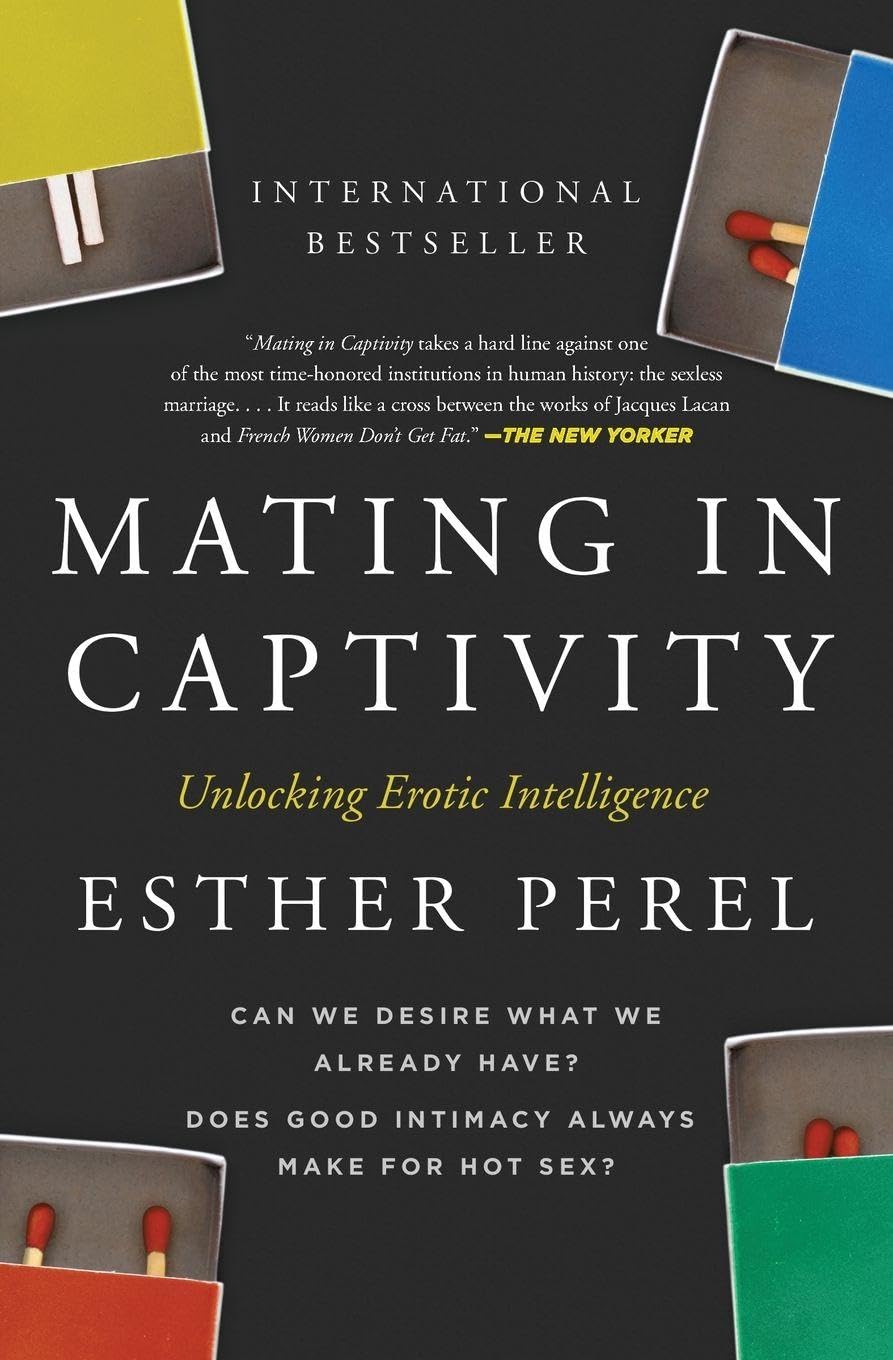 Mating in Captivity by Esther Perel
 The Ethical Slut by Janet W. Hardy & Dossie Easton
 The Five Love Languages by Gary Chapman
As an Amazon Associate I earn from qualifying purchases.