
The Neuroscience of Falling in Love: What Happens in Your Brain
A comprehensive, evidence-based guide to neuroscience of falling in love: what happens in your brain. Written by sexuality experts and grounded in peer-reviewed research.
SexualityExpert.com Editorial Team — general educational content for adult readers.
This article is general educational information only. It is not medical advice, not a diagnosis, and is not written by a doctor. This site is not a doctor and does not provide medical care. Nothing here is medical advice. Full disclaimer.
Introduction
The Neuroscience of Falling in Love: What Happens in Your Brain is a topic that affects millions of people, yet it remains widely misunderstood. This evidence-based guide draws on the latest peer-reviewed research to give you clear, accurate, and judgment-free information.
What the Research Says
This guide is designed to fill that gap.
Key Facts
Questions about The Neuroscience of Falling in Love benefit from distinguishing broad assumptions from article-specific, source-linked context:
A Deeper Look
The psychology and physiology behind the neuroscience of falling in love: what happens in your brain involves multiple interconnected systems — hormonal, neurological, psychological, and social. No single factor explains the full picture.
What Experts Recommend
Leading sex therapists and researchers recommend:
The Brain in Love: A Neurochemical Symphony
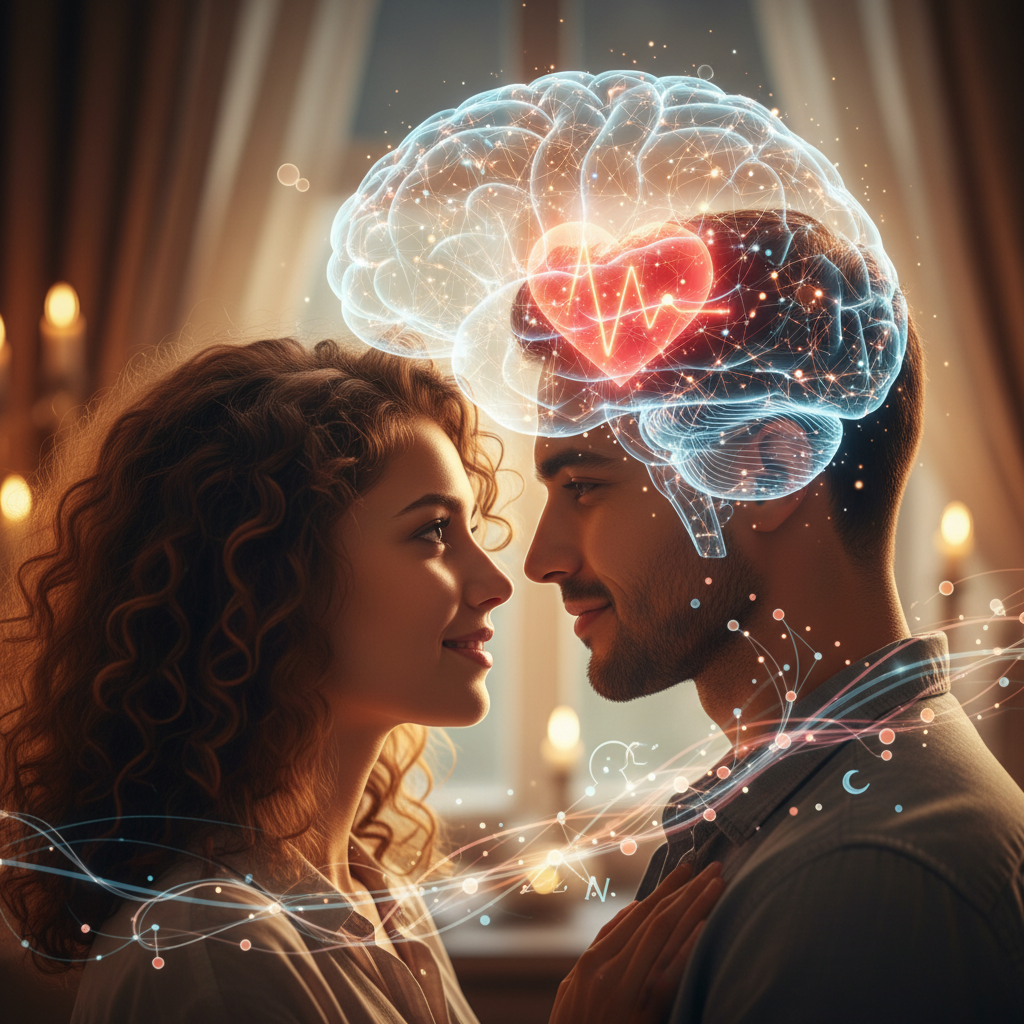
When we fall in love, our brains undergo a remarkable transformation, orchestrating a complex interplay of neurochemicals and neural circuits. This isn't just a poetic notion; it's a scientifically observable phenomenon. Research using functional magnetic resonance imaging (fMRI) has provided significant insights into which brain regions become active when individuals view images of their beloved.
One of the most prominent players in this neurochemical symphony is dopamine. Often referred to as the "reward chemical," dopamine is associated with pleasure, motivation, and goal-directed behavior. When you're falling in love, dopamine levels surge, particularly in the brain's reward system, including the ventral tegmental area (VTA) and the nucleus accumbens. This surge creates feelings of euphoria, intense pleasure, and a strong desire for the beloved. It's why love can feel so addictive; the brain craves that dopamine hit, driving individuals to seek out and spend time with their partner. Dr. Helen Fisher, a renowned biological anthropologist, has extensively researched this phenomenon, describing love as a powerful drive, akin to hunger or thirst, fueled by the dopamine system.
Alongside dopamine, norepinephrine (also known as noradrenaline) also plays a crucial role. This neurotransmitter contributes to the heightened energy, exhilaration, and focused attention often experienced in early love. It can lead to a racing heart, flushed skin, and sleeplessness – the classic symptoms of being "lovesick." Norepinephrine sharpens focus, making the beloved seem uniquely special and central to one's thoughts.
Conversely, levels of serotonin, a neurotransmitter linked to mood and obsessive thinking, tend to decrease in the early stages of intense romantic love. This reduction in serotonin is similar to what is observed in individuals with obsessive-compulsive disorder (OCD), which might explain the intrusive thoughts and preoccupation with the loved one that often characterize new love. This obsessive component, while intense, typically subsides as the relationship matures.
As love deepens and moves beyond the initial passionate phase, other neurochemicals become more prominent. Oxytocin, often called the "love hormone" or "cuddle chemical," is released during physical touch, intimacy, and orgasm. It fosters feelings of attachment, bonding, trust, and contentment. Oxytocin is crucial for long-term pair bonding and is released in both men and women, strengthening the emotional connection between partners. Its release is particularly pronounced during activities like hugging, kissing, and sexual intimacy, reinforcing the desire for closeness and connection.
Similarly, vasopressin is another hormone that plays a significant role in long-term attachment and monogamy, particularly in men. Research on prairie voles, a species known for its monogamous pair bonding, has highlighted the critical role of vasopressin receptors in the brain for forming lasting attachments. In humans, vasopressin is also thought to contribute to feelings of protectiveness and commitment towards a partner.
The interplay of these neurochemicals isn't static; it evolves as a relationship progresses. The initial dopamine-fueled euphoria gives way to the oxytocin and vasopressin-driven feelings of calm, security, and deep attachment. This transition is essential for moving from the intense, often volatile, early stages of love to a more stable, enduring partnership. Understanding these neurochemical shifts can help individuals navigate the different phases of their relationships with greater awareness and appreciation for the biological underpinnings of their emotions.
Cultivating Lasting Connection: Beyond the Initial Spark
While the initial neurochemical rush of falling in love is exhilarating, sustaining a deep, meaningful connection requires conscious effort and understanding of relational dynamics. The brain's reward system, initially flooded with dopamine for novelty and excitement, can adapt over time. This doesn't mean love fades, but rather that the brain seeks different forms of reward, shifting towards the comfort and security provided by oxytocin and vasopressin. Cultivating lasting connection involves actively nurturing these deeper bonds.
One crucial aspect is emotional attunement. This involves being present, listening actively, and responding empathetically to your partner's emotional states. When partners feel truly seen and understood, it strengthens their emotional bond and fosters a sense of psychological safety. Research by Dr. John Gottman, a leading expert on marital stability, emphasizes the importance of "turning toward" your partner's bids for connection, even small ones. For example, if your partner points out something interesting outside, a simple "Oh, that's cool, tell me more!" can reinforce connection, whereas ignoring it can slowly erode intimacy. This consistent turning toward builds a reservoir of positive emotional experiences, which can buffer against inevitable conflicts.
Shared experiences and novelty also play a vital role in keeping the spark alive. While the initial dopamine surge is often linked to the novelty of a new relationship, couples can intentionally create new experiences together to reactivate these reward pathways. Trying new hobbies, traveling to new places, or even just exploring a new restaurant can introduce an element of novelty that stimulates dopamine release and creates fresh, positive memories. This isn't about constantly chasing excitement, but about regularly injecting newness into the relationship to prevent stagnation and reinforce the idea that your partner is a source of joy and discovery. Consider planning a "date night" where you try something completely new together, like a cooking class or a hike in an unfamiliar park.
Furthermore, intentional communication is the bedrock of any strong, lasting relationship. This goes beyond simply talking about daily logistics. It involves expressing appreciation, vulnerability, and addressing conflicts constructively. Learning to communicate needs and boundaries clearly, while also being open to hearing your partner's perspective, is essential. For example, instead of saying, "You never help around the house," try an "I" statement like, "I feel overwhelmed when the chores pile up, and I would really appreciate it if we could tackle them together." This approach reduces defensiveness and opens the door for collaborative problem-solving. Resources like communication workshops or couples therapy can provide valuable tools for improving these skills.
Finally, physical intimacy remains a powerful way to foster connection and release bonding hormones like oxytocin. This doesn't solely refer to sexual activity but encompasses all forms of affectionate touch – holding hands, hugging, cuddling, and gentle caresses. These acts of physical affection signal care, comfort, and security, reinforcing the emotional bond. Regular physical intimacy can act as a powerful stress reducer and a consistent reminder of the deep connection shared between partners. Explore intimacy products that can enhance comfort and pleasure, fostering a deeper physical connection.
Navigating Challenges: When Love Gets Complicated
Even the most deeply bonded relationships face challenges. Understanding the neuroscience of love can also provide insights into why certain difficulties arise and how to navigate them more effectively. When relationships encounter stress, conflict, or perceived threats, the brain's stress response system, involving the release of cortisol and adrenaline, can become activated. This "fight, flight, or freeze" response can hijack rational thought and make constructive communication difficult.
For instance, during an argument, a surge of adrenaline might lead one partner to become defensive and lash out (fight), while the other might withdraw and shut down (flight/freeze). Recognizing these physiological responses in yourself and your partner can be the first step towards de-escalation. Taking a short break during a heated argument to allow cortisol levels to subside can be incredibly effective. This isn't about avoiding conflict, but about re-engaging when both partners are in a more regulated emotional state, capable of thoughtful discussion rather than reactive responses.
Attachment styles, formed in early childhood experiences, also significantly influence how individuals navigate love and conflict. Research by attachment theorists like John Bowlby and Mary Ainsworth demonstrates that our early experiences with caregivers shape our internal working models of relationships, influencing how we seek closeness, respond to separation, and manage distress in adult romantic partnerships. For example, someone with an anxious attachment style might become overly preoccupied with their partner's availability and responsiveness, leading to clinginess or excessive reassurance-seeking when feeling insecure. Conversely, someone with an avoidant attachment style might withdraw or create distance when intimacy deepens, fearing engulfment or loss of independence.
Understanding your own and your partner's attachment styles can provide a framework for interpreting behaviors and responding with greater empathy. For example, if you know your partner tends to withdraw when stressed (avoidant), instead of interpreting it as a lack of care, you might understand it as their coping mechanism and offer space, while reassuring them of your presence. Similarly, if you tend to seek constant reassurance (anxious), you can work on self-soothing techniques and communicate your needs in a way that doesn't overwhelm your partner. Professional guidance from a therapist specializing in attachment theory can be invaluable for couples seeking to understand and shift unhelpful patterns.
Furthermore, the concept of neuroplasticity offers hope and agency in navigating relationship challenges. Our brains are not fixed; they can change and adapt throughout life. This means that with conscious effort and consistent practice, individuals can rewire their neural pathways to develop healthier relational patterns. For example, practicing mindfulness can help regulate the stress response, allowing for more thoughtful reactions during conflict. Engaging in couples therapy can help partners learn new communication skills, challenge negative thought patterns, and create new, positive relational experiences that literally reshape their brains' responses to each other. It's a testament to the brain's incredible ability to learn and grow, even in the complex landscape of love.
Reader questions on The Neuroscience of Falling in Love
What are the main stages of falling in love from a neurochemical perspective?
From a neurochemical perspective, falling in love typically progresses through three main stages, though these can overlap and vary in intensity. The first stage, lust, is primarily driven by sex hormones like testosterone and estrogen, which fuel desire. The second stage, attraction, is characterized by the intense, obsessive feelings of early love, largely fueled by a surge in dopamine and norepinephrine, and a decrease in serotonin. This is the "honeymoon phase" where the beloved feels uniquely special and is constantly on one's mind. The third stage, attachment, develops as the relationship matures and is characterized by feelings of calm, security, and deep bonding. This stage is primarily mediated by oxytocin and vasopressin, which foster long-term commitment and emotional closeness.
Can love truly be "addictive" like a drug?
Yes, in many ways, romantic love can be considered biologically addictive. The brain's reward system, particularly the dopamine pathways, is strongly activated during early love, similar to how it responds to addictive substances. When you're with your beloved, dopamine surges, creating feelings of euphoria and pleasure. When separated, there can be withdrawal-like symptoms, including anxiety, sadness, and a strong craving for the person. This powerful drive, fueled by dopamine, explains why people in love often feel an intense desire to be with their partner and can experience distress when apart. However, unlike substance addiction, love is a natural and often beneficial human experience that typically leads to pair bonding and procreation.
How does stress impact our ability to connect intimately?
Stress significantly impacts our ability to connect intimately by activating the brain's "fight, flight, or freeze" response. When stressed, the body releases cortisol and adrenaline, which are designed to help us cope with immediate threats. However, in chronic stress or during conflict, these hormones can impair the prefrontal cortex, the part of the brain responsible for rational thought, empathy, and emotional regulation. This makes it harder to communicate effectively, listen empathetically, and respond constructively to a partner. High stress can also decrease libido and reduce the release of bonding hormones like oxytocin, making physical and emotional intimacy feel less appealing or even difficult. Managing stress through techniques like mindfulness, exercise, and open communication is crucial for maintaining intimate connection.
Is it possible to fall in love with more than one person at a time?
Yes, from a neuroscientific and psychological perspective, it is possible to experience feelings of love for more than one person simultaneously. While societal norms often emphasize monogamy, the brain's capacity for love is not strictly limited to a single individual. Different people might activate different aspects of the brain's reward and bonding systems. For example, one person might evoke intense passionate attraction (dopamine-driven), while another might provide deep emotional security and attachment (oxytocin/vasopressin-driven). This phenomenon is often explored in discussions of polyamory or ethical non-monogamy. The challenge lies not in the brain's capacity for multiple loves, but in navigating the emotional complexities, communication, and societal expectations that arise when such feelings occur.
What role does empathy play in maintaining a long-term relationship?
Empathy plays a critical role in maintaining a long-term relationship. It involves the ability to understand and share the feelings of another, which is largely mediated by brain regions like the anterior cingulate cortex and the insula. When partners are empathetic, they can truly grasp each other's perspectives, even during disagreements. This fosters a sense of being understood, validated, and cared for, which is essential for emotional intimacy and trust. Empathy helps partners navigate conflicts constructively, offer support during difficult times, and celebrate each other's successes. Without empathy, misunderstandings can escalate, emotional distance can grow, and the deep connection necessary for a lasting bond can erode. Practicing active listening and perspective-taking are key ways to cultivate empathy in a relationship.
Conclusion
The Neuroscience of Falling in Love: What Happens in Your Brain is a topic worth understanding deeply. The more we know — and the more openly we can discuss it — the better equipped we are to make informed decisions about our health, relationships, and well-being. From the initial dopamine rush of attraction to the enduring oxytocin-fueled bonds of attachment, love is a profound biological and psychological phenomenon. By understanding its neurochemical underpinnings, cultivating intentional connection, and navigating challenges with empathy and communication, we can foster relationships that are not only passionate but also deeply fulfilling and resilient.
Evidence for The Neuroscience of Falling in Love
The two sources below provide further context for questions addressed in The Neuroscience of Falling in Love. They offer general information and are not personalized medical or psychological advice.
- NIH/PMC: The neuroendocrinology of love — Supports neurochemical roles of dopamine, norepinephrine, and serotonin in attraction.
- PubMed: Romantic love: an fMRI study of a neural mechanism for mate choice — Verifies fMRI findings of VTA and caudate nucleus activation in early-stage romantic love.
This article is for educational purposes only and does not constitute medical or psychological advice. Consult a qualified healthcare provider for personalized guidance.