
Body Image and Bedroom Confidence
How appearance evaluation gets into intimate life, and small practices that stop the mirror from running the evening.
SexualityExpert.com Editorial Team — general educational content for adult readers.

This article is general educational information only. It is not medical advice, not a diagnosis, and is not written by a doctor. This site is not a doctor and does not provide medical care. Nothing here is medical advice. Full disclaimer.
Body Image and Bedroom Confidence
Picture Andrea in a hotel bathroom in Chicago, ten minutes before she is supposed to be having a good time. She turns sideways, turns the other way, and starts a negotiation with the mirror about whether she is allowed to be seen. Her partner is not unkind. The unkind voice came in with her. This illustrative moment is body image doing what it often does in intimate life: shrinking the evening to a referendum on a body, and crowding out curiosity, humor, and the actual other person.
Bedroom confidence is not a look, and it is not the absence of self-consciousness. It is the ability to stay in the experience you chose, to ask for what you want, and to let a partner's affection land without cross-examining it. People with every kind of body struggle with this. People with bodies that match a current magazine ideal struggle with it too, sometimes loudly, sometimes in secret. The work is not to win the mirror. The work is to stop giving the mirror a vote it did not earn.
What researchers mean by body image
Psychologist Thomas Cash has spent decades studying body image and wrote The Body Image Workbook as a structured way to notice the thoughts, the checking behaviors, and the avoidance that keep dissatisfaction in place. The useful distinction for a lay reader is between evaluation and investment. Evaluation is the grade you give your appearance. Investment is how much of your day, your mood, and your willingness to be close depends on that grade. Two people can dislike the same feature. The one who can still go to dinner, be touched, and enjoy it is investing less of the evening in the grade.
Cash's work also separates appearance-fixing — the hours spent trying to change or hide — from body-image coping that actually widens a life. Hiding, if it is your only tool, trains the belief that you are one glance away from humiliation. That belief does not stay in the bathroom. It follows you into bed as a set of rules: lights off, shirt on, no comments, no positions where you can be "seen." Some of those preferences are simple comfort and should be respected. When the rules are fear, they deserve a closer look, ideally with a therapist who knows body image or sexual concerns. This article will not run that therapy.
You might be thinking the real solution is to change the body, and that confidence talk is a consolation prize. Changing a body is a personal decision involving health, money, and risk, and it belongs with a clinician, not with a pep talk. What the research literature keeps finding is that dissatisfaction can survive weight change, surgery, and new clothes, because the habit of evaluation comes along. If you want a medical opinion on pain, hormones, or a pelvic concern that is being blamed on "just insecurity," read pelvic floor basics and book an appointment. Do not let a shame story delay care.
Practices that are small enough for a Tuesday
Pick one behavior, not a new personality. Body-image work fails when it starts as a speech about self-love and never becomes a repeated action.
Turn down one checking loop. Mirror-checking, photo-zooming, and asking "do I look okay?" on a timer keep the evaluation hot. Choose a limit you can keep for seven days: one look in the mirror while dressing, no seeking a second opinion from your partner about the same feature. If anxiety spikes, that spike is the habit complaining. It is not evidence you are in danger.
Let a compliment land once. When a partner says you look good to them, practice "thank you" and a breath, instead of a rebuttal. The rebuttal feels like honesty. It functions as a refusal of their experience. You can disagree with a magazine and still accept a specific person's affection. If their comments are actually critical, backhanded, or aimed at parts of you they know you hate, that is not a compliment to practice receiving. Tell them to stop. Criticism disguised as help is still criticism.
Choose light and clothing on purpose, ahead of time, so the decision is not a panic in the doorway. Preferring a dim room can be aesthetic. It becomes a problem when you cannot imagine being touched in daylight even by someone you trust, and the preference is shrinking your life. Say the preference as a request — "I like the lamp, not the overhead" — rather than as an apology for existing.
Talk about desire as if your body is allowed to have some. The desire discrepancy toolkit is useful here, because a person who is busy monitoring their stomach is often not short on love. Their brake is on. Telling a partner "I go quiet when I think you're looking at my thighs, and I need a reminder that you want me, not a debate about whether my thought is logical" gives them something to do.
What partners should stop saying
"You should be confident." Confidence is not a switch, and ordering it produces performance, not ease.
"I love you anyway." The "anyway" announces that there is something to overlook. If you find your partner attractive, say the attractive part specifically, without a comparison to a past body or to someone else.
"Just lose X and you'll feel better." You do not know that, and you have turned a tender moment into a project plan. If you are worried about health, say you are worried about health, once, outside the bedroom, and then let them talk to a clinician. Do not make sex the enforcement mechanism.
If your own body image is the one in the way, do not hand the project to your partner. Ask for a specific kindness, and do your own practice. The about page describes this site as education, not treatment. A licensed therapist is the treatment door. The glossary can align the words you use so "I feel ugly tonight" is heard as a feeling, not as a fact the other person must disprove for an hour.
When the distress is bigger than a bad mirror day
Get in-person help if body thoughts are keeping you from eating regularly, if you are exercising to the point of injury or compulsion, if you avoid medical care because you do not want to be seen, or if being looked at during sex brings panic rather than mere awkwardness. Those are health problems. They are not a failure to read the right article.
Partners can help by staying steady and by not joining the body-policing. They cannot love someone out of a clinical eating disorder or a trauma response. If you are supporting someone through that, ask what they need, believe them, and encourage professional care without making yourself the professional.
The next time you are in a bathroom inventing a case against the evening, the question is narrower than "am I attractive?" It is "what is one thing I can do in the next five minutes that treats this body as mine, and this night as something I already chose?"
Questions about body image and intimacy
Does confidence require liking every part of my body? No. It requires not letting evaluation cancel the closeness you want.
Should we avoid talking about bodies entirely? Avoid grades and fixes. Specific affection, and specific requests about light or touch, are useful.
What if my partner's comment hurt and they say I'm too sensitive? The hurt is information. You can ask for a different comment without accepting a debate about your sensitivity.
Where these ideas come from
Thomas F. Cash's body-image research, including The Body Image Workbook, distinguishes appearance evaluation from how heavily a person invests mood and behavior in that evaluation. The practices above are educational applications of that distinction, not a clinical protocol and not a claim about any reader's diagnosis.
This is general education for adults, not mental-health treatment and not nutrition or fitness advice. If body distress is affecting eating, safety, or daily life, see a qualified clinician. The disclaimer states the same limit.
Recommended on Amazon
 Come as You Are — Emily Nagoski
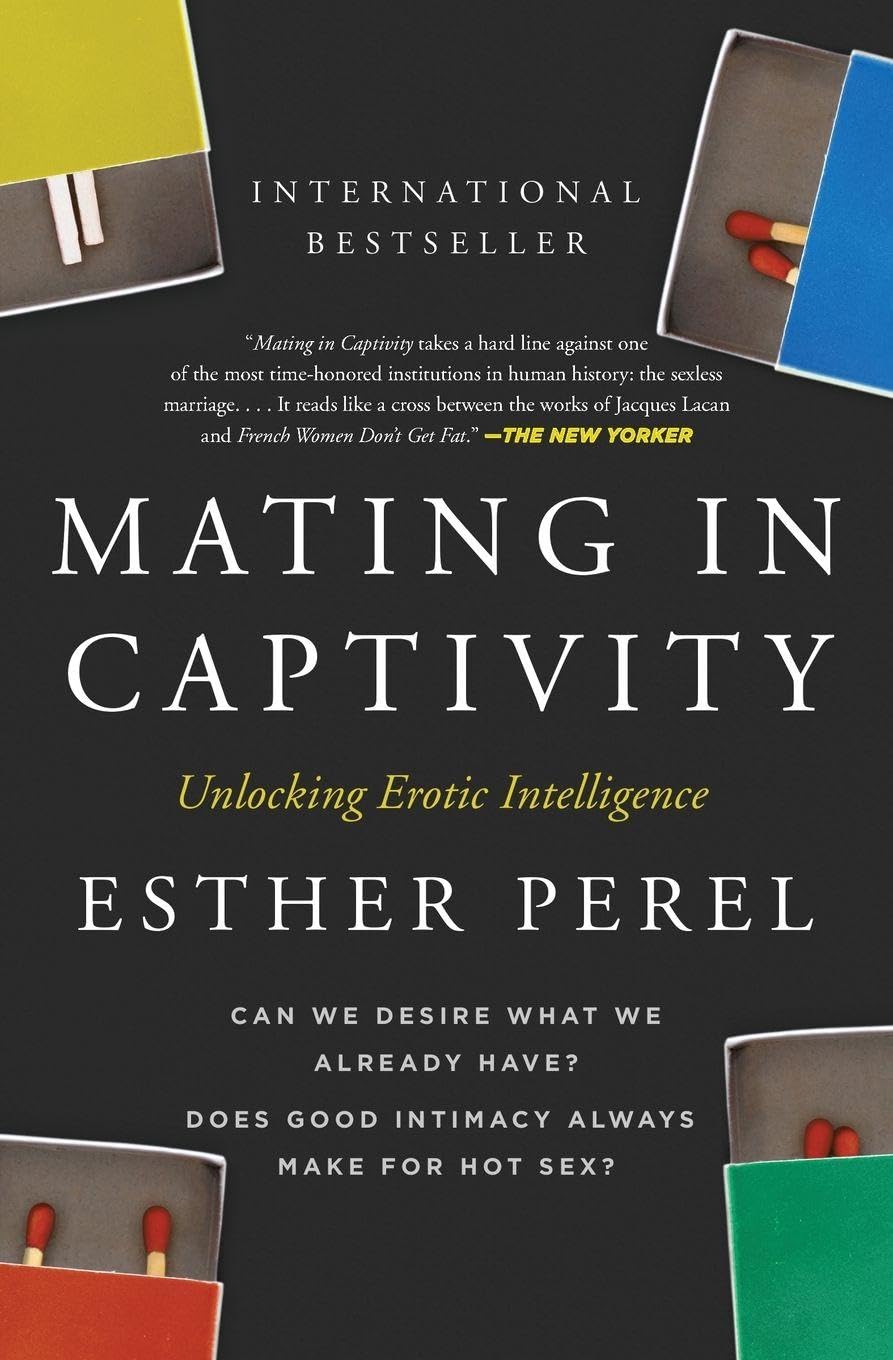 Mating in Captivity — Esther Perel
 The Ethical Slut — Janet W. Hardy & Dossie Easton
 The Five Love Languages — Gary Chapman
As an Amazon Associate I earn from qualifying purchases.