
Desire Discrepancy: A Couples Toolkit
A practical way for partners who want different amounts of sex to talk about brakes, frequency, and pressure.
SexualityExpert.com Editorial Team — general educational content for adult readers.

This article is general educational information only. It is not medical advice, not a diagnosis, and is not written by a doctor. This site is not a doctor and does not provide medical care. Nothing here is medical advice. Full disclaimer.
Desire Discrepancy: A Couples Toolkit
Picture Sam and Ana on a Sunday night in a small apartment in Tucson. The dishes are done. The show they like is queued. Sam reaches over, hopeful. Ana flinches, then feels guilty about the flinch, then feels angry about the guilt. Nobody has been cruel. They have had this exact evening enough times that both of them walk into it already defended. This is an illustrative example of desire discrepancy: two people who want sexual closeness at different times, or with different frequency, and who have started to treat the difference as a verdict on the relationship.
The difference itself is ordinary. What wears people down is the story they attach to it. The higher-desire partner hears "you don't want me." The lower-desire partner hears "you are never enough." Both stories skip the more useful question, which is what makes closeness easier to want, and what makes it harder.
Two kinds of wanting
In 2000, clinician Rosemary Basson described sexual response as often circular, especially in longer relationships. Desire does not always arrive first, like a spark you either have or lack. For many people it shows up after warmth, privacy, and a sense that the evening is not a test. Basson called this responsive desire. Spontaneous desire — the kind that seems to appear before any invitation — is real too. It is just not the only honest shape wanting takes.
Emily Nagoski's book Come as You Are (2015) puts a related research idea into everyday language. The dual-control model, developed by Erick Janssen and John Bancroft, pictures sexual response with both an accelerator and a brake. The accelerator notices appeal, affection, novelty, and feeling chosen. The brake notices stress, resentment, pain, a messy kitchen that became a symbol, a comment from last week that never got repaired, and a body that does not feel safe. If the brake is on, pressing the accelerator harder does not help. It often makes the brake press down.
You might be thinking this is just a polite way to say the lower-desire partner has all the power. It can feel that way, and the feeling deserves a real answer. A relationship where one person is always declining, and the other is always asking, will curdle. The toolkit is not "wait forever and call it respect." It is a way to find out whether the brake is stress, pain, resentment, or a genuine difference in how often each of you wants sex — and then to tell the truth about which one it is.
Name the brake before you negotiate the calendar
Sit down at a time when nobody is already disappointed. Phones in another room. Twenty minutes, not a summit. Each person answers three questions out loud, without fixing the other person's answers:
- When is it easiest for me to want closeness?
- What reliably puts the brake on, even if I love you?
- What do I need in the forty-eight hours before, not only in the ten minutes before?
Write the answers down. Couples who only talk about this at 11 p.m. on a Tuesday, after one of them has already reached over and been turned away, are negotiating from a bruise. The communication guide shows how a specific request lands differently from "you never."
Common brakes that are not about attraction: untreated pain with penetration or arousal, a pelvic-floor problem, antidepressant side effects, exhaustion from shift work, grief, and a stack of unfinished fights. Pain is a medical question. If sex hurts, stop treating it as a mood and read pelvic floor basics, then see a clinician. A blog cannot tell you why a body hurts.
Resentment is a relationship question. If one person does the planning, the chores, and the emotional repair, their brake may be on before anyone mentions sex. That is not a puzzle you solve with lingerie. It is a fairness problem. Name the task, divide it, and revisit it in two weeks. Do not trade chores for sex as if intimacy were a payment. That bargain teaches both of you the wrong lesson about consent.
A frequency talk that does not become a scoreboard
Once the brakes are on the table, you can talk about frequency without pretending you want the same thing. Try this structure.
Each person states a range, not a single number: "I feel connected when we are sexual about once a week, and I get lonely if a month passes with no conversation about it." Ranges leave room. A single number becomes a quota, and quotas breed resentment the moment life intervenes.
Then agree on what "sexual" includes for the two of you this month. Some couples include a wide map: kissing that is not a prelude with a secret agenda, massage, shared bathing, or intercourse. The map has to be honest. If one person only feels chosen when a particular act happens, say so. If the other person needs several low-pressure evenings before that act is welcome, say that too. A fake agreement, where one person nods and then avoids, is more expensive than a smaller true one.
Put a review date on the calendar. Two weeks is long enough to learn something and short enough that a bad plan does not become your personality. At the review, ask what felt respectful and what felt like pressure. Pressure is not always loud. It can be a sigh, a joke, or a look that says the evening is already a failure.
The higher-desire partner's work, and the other person's work
If you want sex more often, your work is to make a no survivable. That means you do not punish it, you do not keep score out loud, and you have a way to handle your own disappointment that does not land on your partner as a project. Masturbation, a walk, a friend you can be honest with, a therapist: these are adult options. They are not consolation prizes you mention in order to produce guilt.
If you want sex less often, your work is to stay in the conversation. Disappearing, mocking the request, or offering a vague "soon" for months is its own kind of distance. You can decline tonight and still be a partner who initiates sometimes, who says what would make initiation easier, and who does not treat the other person's longing as embarrassing.
Neither job includes sex you do not want. Duty sex, offered to end a fight or prevent a mood, erodes desire further because the brake learns that intimacy is a threat. If that has become the pattern, say it in daylight: "I have been saying yes to keep the peace, and I need that to stop." Then get help if you cannot stop it alone. A licensed couples therapist or a sex therapist can see the loop. This article cannot.
Emotional closeness still matters on the nights you are not sexual. A twenty-minute conversation about the actual day, with advice withheld until it is requested, is one of the practices in building emotional intimacy. The tools page has short quizzes if you want a private way to notice your own patterns before you talk.
The useful question, the next time the reach and the flinch show up, is not "who is the problem?" It is "which brake is on, and what would make a real yes possible this week?"
Questions about mismatched desire
Does a lower level of desire mean the relationship is failing? No. It means you have a difference to understand. Failure starts when the difference is punished or ignored.
Should the higher-desire partner just stop asking? They should stop pressuring. They should not have to pretend they have no wants.
Can medication change desire? It can, in either direction. That is a question for the prescriber, not for a blog to answer about your body.
Where these ideas come from
Rosemary Basson's 2000 paper described a circular, often responsive model of sexual response. Erick Janssen and John Bancroft developed the dual-control model of sexual excitation and inhibition. Emily Nagoski explains that model for general readers in Come as You Are (Simon & Schuster, 2015).
General information for adults, not a diagnosis and not therapy. Pain, a sudden loss of desire, or distress that flattens your days belongs with a qualified clinician. Read the disclaimer.
Recommended on Amazon
 Come as You Are — Emily Nagoski
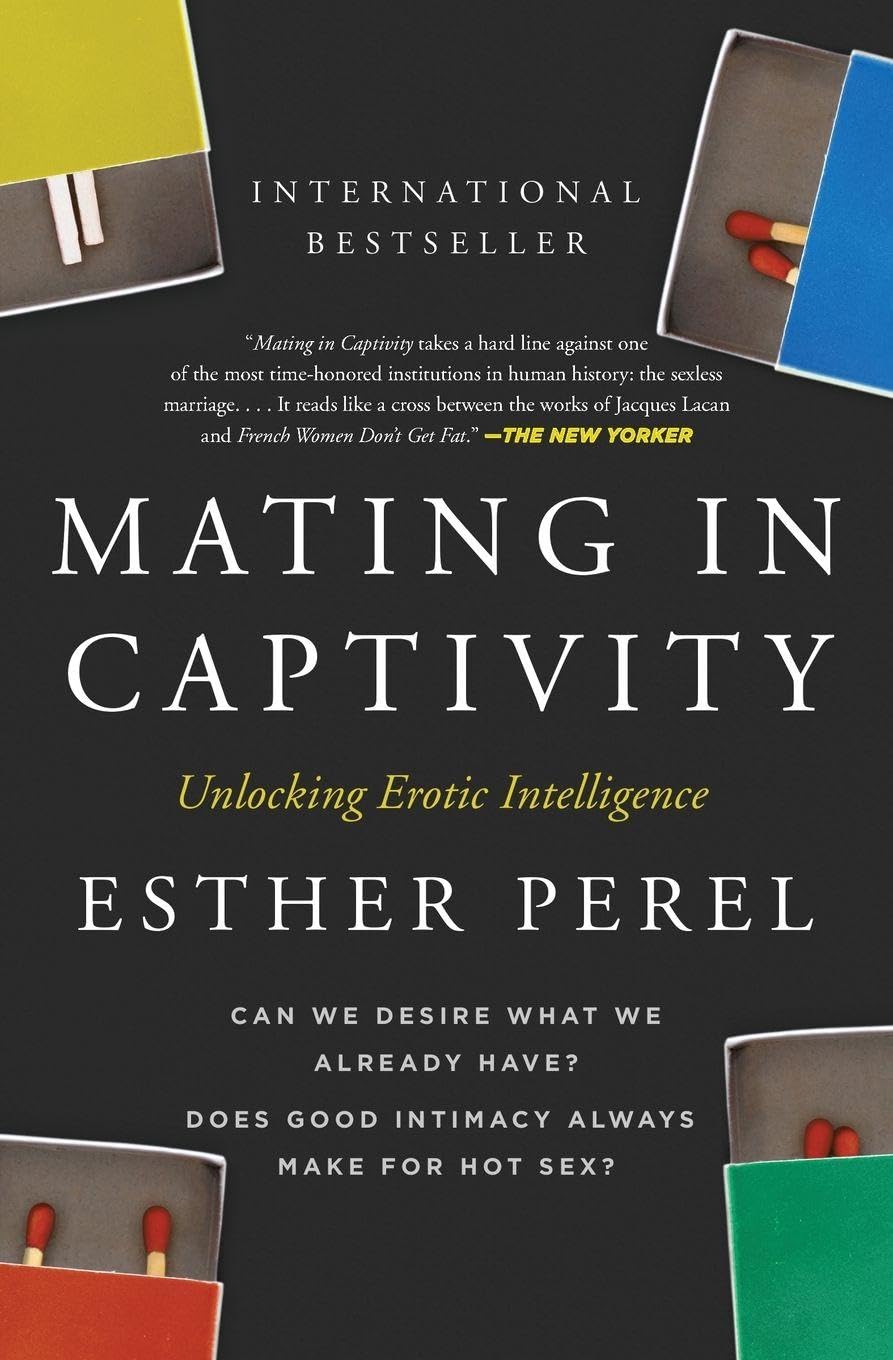 Mating in Captivity — Esther Perel
 The Ethical Slut — Janet W. Hardy & Dossie Easton
 The Five Love Languages — Gary Chapman
As an Amazon Associate I earn from qualifying purchases.