
Jealousy as Information, Not a Verdict
How to separate a jealous story from the facts, then ask for care without turning the feeling into a trial.
SexualityExpert.com Editorial Team — general educational content for adult readers.

This article is general educational information only. It is not medical advice, not a diagnosis, and is not written by a doctor. This site is not a doctor and does not provide medical care. Nothing here is medical advice. Full disclaimer.
Jealousy as Information, Not a Verdict
Picture Chris at a birthday dinner in Brooklyn, watching their partner laugh for a long time with a coworker Chris has never met. The laugh is not a crime. Chris's chest still tightens, and the next three hours become a private prosecution. This illustrative scene is jealousy doing its least helpful job: turning a feeling into a verdict before anyone has checked the facts or the agreement.
Jealousy is an emotion that shows up when a bond feels threatened. It can point at a real threat, a remembered threat, or a story you wrote in the gap between a text and a reply. The feeling is allowed. The verdict is optional. What you do in the hour after the feeling arrives is the part you can practice.
Separate the data from the story
Before you speak, write two columns on a napkin or in a note you do not send. Column one is observable: "They stepped outside with Sam for ten minutes. I did not know Sam would be here." Column two is the story: "They are bored with me and lining up a replacement." Most of the pain lives in column two. Most of the useful conversation lives in column one.
Ask which kind of threat this is.
A broken agreement is information about behavior. If you both said this relationship is exclusive and you just watched a kiss, you are not "being jealous." You are noticing a breach. The next conversation is about the breach, the truth, and whether repair is possible. Do not let anyone rename that as insecurity.
An unclear agreement is information about the relationship's structure. If you never said whether flirting, close friendships, or other partners are in bounds, jealousy is telling you the contract is blank. Fill it in with words. A structure chosen openly by everyone involved is different from relabeling a secret.
A fear without a new fact is information about you. An old betrayal, a parent who left, a week of bad sleep, a partner who has been distant for reasons that are not this coworker: any of those can turn an ordinary laugh into an alarm. The alarm still deserves care. It does not deserve to run the evening.
You might be thinking that sorting it this way lets a partner explain away anything. It does not. Column one still counts. If the observable facts keep lining up — secretive phones, stories that change, anger when you ask a plain question — you do not need a perfect theory. You need a boundary. The communication guide helps you ask the plain question without opening on "you always."
Attachment habits, not a personality sentence
In 1987, Cindy Hazan and Phillip Shaver published a paper arguing that adult romantic bonds draw on the attachment patterns John Bowlby described and Mary Ainsworth observed in children. The popular shorthand is secure, anxious, and avoidant. The shorthand is a map, not a diagnosis you get to stick on your partner during a fight.
An anxious pattern tends to move toward the bond when it feels shaky: more questions, more checking, more need for reassurance. An avoidant pattern tends to move away: jokes, silence, a sudden need to leave the party. Both can be jealous. They just spend the jealousy in opposite directions. A secure-enough response, which is a skill and not a birthright, sounds like: "I got scared. Here is the fact I saw. Here is what I need in order to settle." Then the person can hear an answer without conducting a second interview.
If your pattern is to check phones, locations, or message histories, name that as your behavior, not as their obligation. Searching someone's devices without agreement is not self-soothing. It is a violation, and it usually increases the panic it was meant to quiet, because now you are reading fragments without context and you have a new thing to confess or hide. If you cannot stop checking, a therapist who understands anxiety or relationship trauma is a better tool than a tighter set of rules for your partner.
A conversation that stays a conversation
Wait until you are not flooded. John Gottman has advised couples to pause at least twenty minutes when the body is in alarm before trying to resolve a conflict, because reasoning comes back slowly. Use the pause to finish the two columns, not to build a closing argument.
Then try a four-part sentence you can actually say at the sink the next morning:
- The fact: "When you were outside with Sam, I didn't know who they were."
- The feeling: "I felt replaceable and embarrassed."
- The ask: "Next time a coworker is coming, I'd like a heads-up, and an introduction."
- The limit of the ask: "I'm not asking you to stop having friends. I am asking not to be surprised in the middle of a party."
Listen to their fact, even if it is boring. "Sam is on my team, we were talking about a deadline, I should have introduced you" is a repair. "You're pathetic for caring" is contempt. Contempt is not a difference of opinion. If contempt is the usual reply to a vulnerable ask, the jealousy is no longer the main problem. The breakup guide is relevant when respect is gone, and the disclaimer is relevant when you need to remember this page cannot judge your relationship for you.
Distance makes the same feeling louder, because you have fewer ordinary data points. If you live apart, pair this article with long-distance habits so the plan includes a rhythm, not only a rule about other people.
When the alarm is about safety
Some jealousy is a safety system working correctly. Controlling who you see, isolating you from friends, checking your location as a condition of affection, or threatening to harm you or themselves if you leave: that pattern is not a feeling to empathize your way through. The National Domestic Violence Hotline at 1-800-799-7233 can help you name it. If you are in immediate danger, contact local emergency services. You do not need a tidy explanation before you get safe.
On the other side, your jealousy does not entitle you to control a partner's friendships, job, clothes, or family. A request for transparency about an agreement you both made is fair. A demand that they shrink their life so you never feel a flicker is not sustainable, and it will make the flicker louder.
The question to sit with before you send the text is this: am I asking for the truth and for care, or am I asking them to carry a feeling I have not looked at yet?
Questions about jealousy
Is jealousy proof that I love them? It is proof that you feel a threat. Love can exist with or without that alarm.
Should I tell them every jealous thought? Share the ones tied to a fact and a request. A running commentary of every worry becomes a second job for them.
Can an agreement include other partners and still include jealousy? Yes. Agreements reduce guesswork. They do not delete feelings. The feelings still need a place to be said.
Where these ideas come from
Cindy Hazan and Phillip Shaver, "Romantic Love Conceptualized as an Attachment Process," Journal of Personality and Social Psychology (1987), connected adult romantic jealousy and closeness to attachment ideas from John Bowlby and Mary Ainsworth. John Gottman's couples research recommends a physiological break of at least twenty minutes before resuming a flooded conflict. The National Domestic Violence Hotline (1-800-799-7233) is the public resource for coercive control.
Relationship education for adults, not therapy and not a risk assessment. If you are afraid, use emergency services or the hotline above. More limits are on the disclaimer.
Recommended on Amazon
 Come as You Are — Emily Nagoski
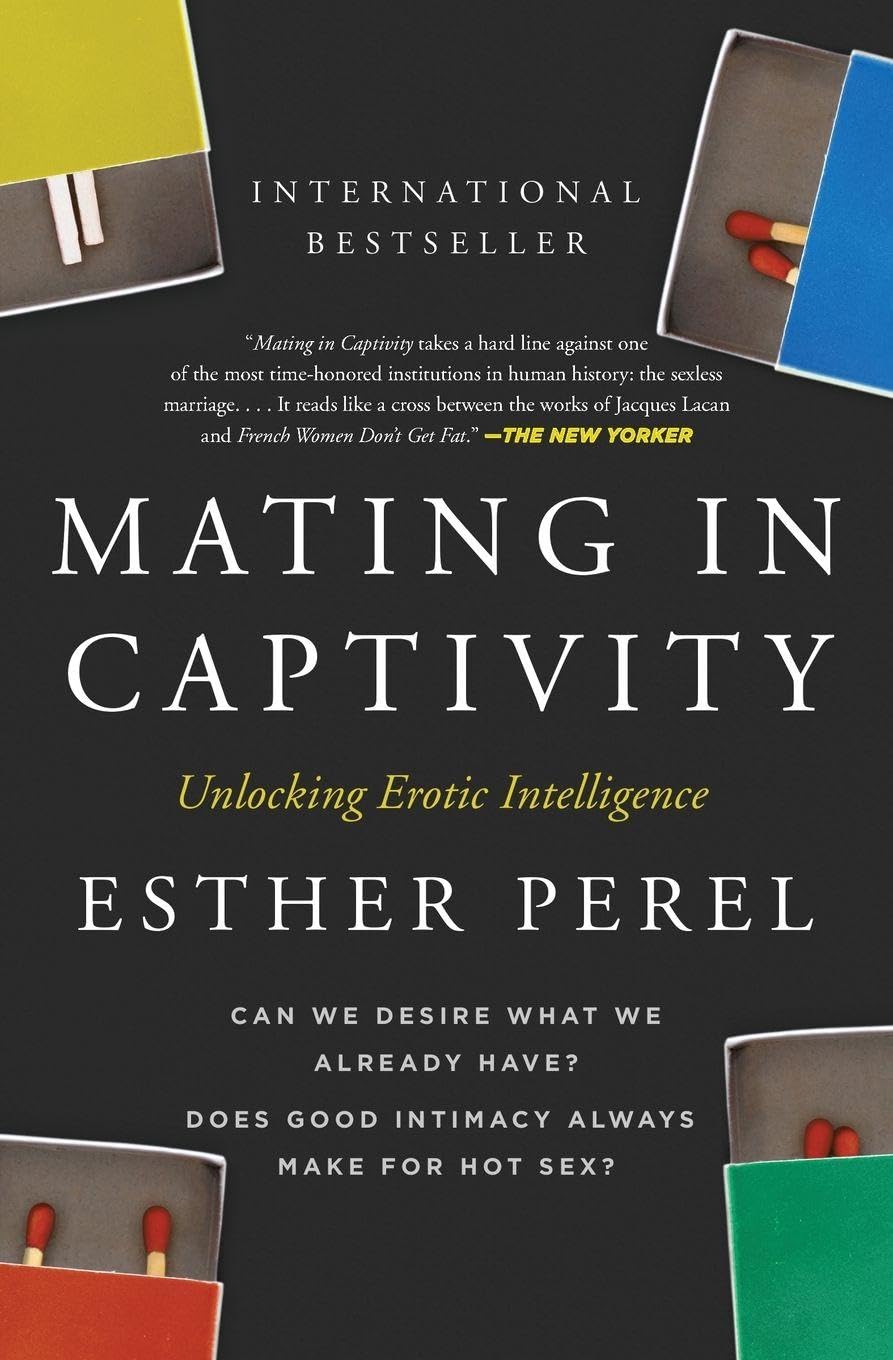 Mating in Captivity — Esther Perel
 The Ethical Slut — Janet W. Hardy & Dossie Easton
 The Five Love Languages — Gary Chapman
As an Amazon Associate I earn from qualifying purchases.