
Long-Distance Intimacy Habits That Survive Time Zones
Rituals, conflict rules, and visit recovery for adults keeping a relationship across distance.
SexualityExpert.com Editorial Team — general educational content for adult readers.

This article is general educational information only. It is not medical advice, not a diagnosis, and is not written by a doctor. This site is not a doctor and does not provide medical care. Nothing here is medical advice. Full disclaimer.
Long-Distance Intimacy Habits
Picture Mina on a bus in Denver at 9:40 p.m., rehearsing a video call she is already late for because her shift ran over. Chris is in a kitchen in Halifax, dinner going cold, trying not to open with "you're late again." They like each other. They also live inside a three-hour gap and a six-week gap between visits. This illustrative couple is doing what a lot of adults do: trying to stay close without pretending a screen is a kitchen table.
Distance does not automatically ruin a relationship, and it does not automatically prove devotion. It raises the cost of vagueness. You cannot rely on a passed coffee mug or a hand on a shoulder to repair a clumsy sentence. The habits have to be chosen on purpose, or the relationship becomes a stack of missed calls and a very intense weekend every other month.
A rhythm you can keep on a bad week
Grand gestures travel well on social media and poorly on a Tuesday when someone is sick. Pick a small rhythm and protect it. Many couples do better with one reliable contact a day — a voice note, a short call, a photo of the actual lunch — plus one longer conversation they both put on the calendar. The longer one has a start time in both time zones, written down. "Tonight" is not a time.
Decide what the short contact is for. If every text is expected to be emotionally deep, people start dodging the text. A mundane "on the bus, feet hurt, call at 8 your time" keeps the thread alive. Save the harder topic for the scheduled conversation, when neither of you is walking into a meeting.
John Gottman's research on couples popularized the idea of a "bid" for connection: a small reach, verbal or not, that asks the other person to turn toward you. On a screen, bids are easy to miss because they look like ordinary messages. "Look at this dog" can mean "please be with me for ten seconds." Turning toward it means you answer the dog, not only the logistics. Turning away, over and over, teaches your partner to stop reaching. You do not have to answer every bid with a paragraph. You do have to stop treating them as noise.
You might be thinking you are too busy for a ritual, and that a real partner would understand. Understanding is not the same as never seeing you. If your job eats the call three weeks running, the relationship is running on a story about the future. Say the constraint out loud and move the ritual, rather than apologizing in a circle. The piece on emotional intimacy is about those small reaches in any household. Distance just removes the accidental ones.
Conflict when you cannot touch
Fights feel larger on a phone because you cannot see the face soften. A few rules keep them from eating the week.
Name the topic in the first two sentences. "I felt dropped when the call ended while I was mid-sentence" is a topic. "You clearly do not care about this" is a character attack, and it will get you a defense, not a repair. The communication guide goes further on soft openings. Use it before you send the novel-length text.
Do not have the fight in fragments across twelve hours of notifications. Agree to pause, then come back at a named time. Gottman has long advised couples who are physiologically flooded — heart racing, thinking narrowed — to take a break of at least twenty minutes before resuming, because the body does not settle on command. On a video call, that break includes hanging up. Say when you will be back. Then be back. A pause without a return time feels like a disappearance.
Keep scorecards out of the call. Who traveled last, who paid, who stayed up later: those facts matter, and they deserve their own calm conversation, not a weapon in the middle of a different hurt. If jealousy is the real topic — a coworker, a night out, a slow reply — read it as information and use the jealousy guide rather than turning detective. Searching a partner's accounts is not a bid for connection. It is a breach of trust you will then have to repair.
Visits, and the day after the visit
The visit is not the relationship. It is a concentrated sample, and samples mislead. People often spend the first day merging two fantasies and the last day grieving in advance. Plan the middle: one activity that is not sex and not logistics, one conversation about money or the calendar, and one stretch of doing nothing in the same room. If the only way you know how to feel close is in bed, the airport goodbye will feel like a verdict. It is often just exhaustion.
The crash after a visit is common enough that you should expect it. One or both of you may be irritable, numb, or suddenly doubtful. Do not make a permanent decision inside that crash. Drink water, sleep, and talk the next day about what was good and what was hard, in that order. If every visit ends in a threat to break up, the crash is no longer the explanation. The fit of the distance is the explanation.
Before you rely on sexual closeness during a visit, talk about testing and barriers while you are apart, when nobody is trying to be spontaneous in a hallway. The STI testing rhythm article is the practical version of that talk. A visit is a bad moment to discover you disagree.
Is the distance still the right structure?
Ask this twice a year, on purpose, not only after a bad week. Three questions are enough.
- Do we have a date, even a rough season, when we will live in the same place — or have we agreed that distance is the ongoing form?
- Is the effort roughly fair, counting money, travel, and who adjusts their sleep?
- Do I like the person I am when we are apart, or am I mostly waiting?
If you cannot answer the first question, you are in an indefinite waiting room. Some couples tolerate that. Many do not, and they call the intolerance a lack of love. It may be a lack of a plan. If the second answer is "no" for six months, renegotiate or resent. If the third answer is "I disappear when we are apart," the relationship needs a different shape, or you need support that is not only this one person. The tools on this site are a private place to notice patterns. They are not a couple's decision.
A love-language mismatch gets louder across distance, because some ways of showing care do not compress into a call. The love languages guide can help you see why a long email feels empty to someone who needed a scheduled hour of attention.
The decision in front of you is not whether distance is romantic. It is whether the rhythm you are actually keeping is one you would choose again this month.
Questions about long-distance intimacy
How often should we talk? Often enough that both of you feel chosen, and rarely enough that the call is not a second job. Agree on a number and revise it.
Is jealousy a sign the distance is wrong? It is a sign that something needs words. Sometimes the structure is the problem. Sometimes a specific fear is.
Should we pause sex until we live together? Only if that is the agreement you both want. If you are sexual apart or together, keep consent and health talks current.
Where these ideas come from
John Gottman's published work with couples describes "bids" for connection and recommends a break of at least twenty minutes when a person is physiologically flooded before a hard talk resumes. The Gottman Institute summarizes the criticism-contempt-defensiveness-stonewalling pattern at gottman.com. None of that research was conducted only on long-distance couples; the habits above are an application, not a claim that distance has a single correct schedule.
General relationship education for adults, not couples therapy. If the distance includes control, threats, or fear, use local emergency help or the National Domestic Violence Hotline at 1-800-799-7233. See the disclaimer.
Recommended on Amazon
 Come as You Are — Emily Nagoski
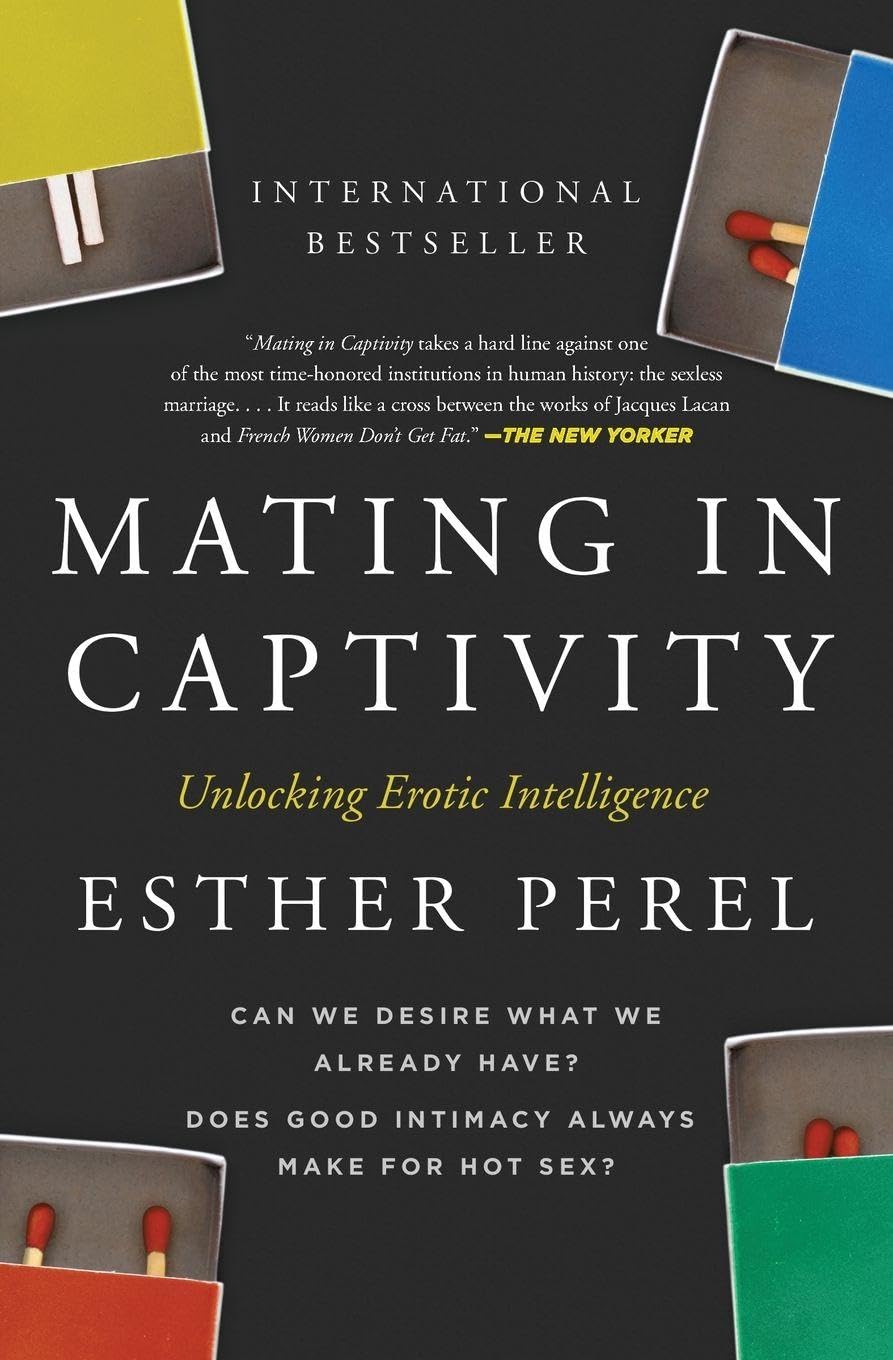 Mating in Captivity — Esther Perel
 The Ethical Slut — Janet W. Hardy & Dossie Easton
 The Five Love Languages — Gary Chapman
As an Amazon Associate I earn from qualifying purchases.