
Sexual Health Basics Every Adult Should Know
Testing, contraception, vaccines, and the symptoms that should move you from a calendar to a clinician.
SexualityExpert.com Editorial Team — general educational content for adult readers.

This article is general educational information only. It is not medical advice, not a diagnosis, and is not written by a doctor. This site is not a doctor and does not provide medical care. Nothing here is medical advice. Full disclaimer.
Sexual Health Basics Every Adult Should Know
Picture Camille in a pharmacy aisle in Phoenix, comparing two boxes and pretending to read her phone so nobody will ask if she needs help. She is an adult with a job, a partner, and a perfectly ordinary question about emergency contraception, and she still feels fourteen. This illustrative pause is what sexual health looks like for a lot of people: not a crisis, not a lecture, a practical question that deserves a straight answer and a clinician when the question gets specific.
The World Health Organization's working definition, published in 2006, says sexual health is a state of physical, emotional, mental, and social well-being in relation to sexuality. It is not merely the absence of disease, dysfunction, or infirmity. That sentence is worth keeping, because a negative test and a miserable intimate life can exist in the same year. So can a loving relationship and an infection nobody noticed. Health, in this sense, is a set of practices and a set of relationships to care, not a status you earn by being "good."
Prevention that belongs on a calendar
Infections are one piece, and they are the piece people skip because they feel fine. Many sexually transmitted infections have no symptoms. The Centers for Disease Control and Prevention recommends annual chlamydia and gonorrhea screening for all sexually active women under 25, and screening for women 25 and older when risk is higher, such as a new partner. CDC guidance also says everyone ages 13 to 64 should be tested for HIV at least once. Pregnant people are advised to be tested for syphilis, HIV, hepatitis B, and hepatitis C early in pregnancy. None of that is a complete personal plan. It is the reason to have a plan. The companion article, an STI testing rhythm for adults, goes further into sites, partners, and how to keep a record of what was actually tested.
Barriers reduce risk. They do not delete it. External condoms, internal condoms, and dental dams are tools, and they work better when you decide on them before you are in a hurry. If a condom breaks or slips, emergency contraception may be relevant for pregnancy risk, and a clinician or pharmacist can tell you about HIV post-exposure prophylaxis and other steps that are time-sensitive. Do not spend the evening searching for a blog to rank those options. Use the pharmacy or an urgent line tonight, and follow up.
Vaccines are the other half of prevention that people forget after adolescence. CDC recommends HPV vaccination as a routine immunization starting at 11 or 12, with catch-up through age 26 for many people who were not vaccinated on schedule, and shared decision-making with a clinician for some adults 27 through 45. Hepatitis B vaccination is widely recommended; ask whether you completed a series. A vaccine is not a test result, and a test result is not immunity.
You might be thinking you are low risk because you are in a long relationship. Risk depends on what has actually happened, including agreements that were not kept and infections that were silent. A baseline conversation with a clinician is still reasonable. Loyalty is not a lab assay.
Contraception is a fit, not a moral category
Methods differ in how well they prevent pregnancy, how they affect bleeding, whether you have to remember them daily, and whether they protect against infections. Most contraceptive methods do not protect against infections. A condom plus another method is a common combination for that reason, and it is a conversation, not a commentary on anyone's character.
A clinician who knows your history, your medications, your migraines, your blood pressure, and whether you smoke should help you choose. What suited a friend may be a poor fit for your body. Emergency contraception is time-sensitive, and the window depends on the product and on body weight for some pills. A pharmacist can explain what still applies today. A copper IUD placed by a clinician is one of the options people do not realize can serve as emergency contraception; ask, rather than assuming you have missed every door.
If you are trying to become pregnant, or trying very hard not to, say that plainly at the visit. Hinting produces a generic pamphlet. The about our content page describes how this site stays educational. It will not choose a method for you.
Pain, pleasure, and the conversations that get postponed
Pleasure is part of sexual health under the WHO framing, not a luxury you get after you have finished being responsible. You are allowed to want sex to feel good, and you are allowed to say what does not. Consent is the floor under that want. The consent guide is the longer version: a yes should be free, specific, and reversible. Pressure, even polite pressure, is not a communication style. It is a problem.
Pain is a medical question. Pain with penetration, deep aching afterward, bleeding that is new, sores, testicular pain, a sudden change in discharge, or burning that does not go away should be seen in person. Do not manage those with alcohol, numbing products, or a partner's theory that you need to relax. Pelvic-floor muscles, infections, skin conditions, and hormonal changes are among the possibilities, and they are not ranked here because they cannot be ranked from a paragraph. Start with pelvic floor basics only as orientation, then book the visit.
Mood and medication belong in the same conversation. Some antidepressants and other drugs change desire, arousal, or orgasm. That is a known kind of side effect, and it is a reason to call the prescriber, not a reason to quit a medication on your own and not a reason to decide you are broken. Bring a sentence: "Since I started this medicine, sexual response has changed in this specific way. What are my options?"
A maintenance list you can actually finish
Once a year, if you are sexually active, do three unglamorous things.
- Tell a clinician what kind of sex you have had and ask which tests that implies. Write down the answer.
- Check contraception, vaccines, and any medicine that has changed how your body responds. Refill what you need before you are out.
- Ask your partner, if you have one, whether your agreements about barriers and other partners still match reality. If the answer is fuzzy, treat the fuzz as the topic, not as a mood.
Add sooner visits after a new partner, a condom failure, a symptom, or a pregnancy. Sooner is not dramatic. Sooner is how you avoid turning a small question into Camille's frozen moment in the aisle, except with a fever.
Local health departments publish clinic finders. Insurance nurse lines and pharmacist windows are appropriate for "what do I do tonight" questions about emergency contraception. Emergency rooms are appropriate for severe pain, heavy bleeding, assault, or symptoms that scare you. If the issue is a sexual assault, you can also call RAINN at 800-656-HOPE (4673). You do not have to narrate your life to deserve care.
The disclaimer is the boundary on this whole page: we do not examine you, prescribe, or know your chart.
Your move, if you have been postponing the ordinary version of this, is to put one appointment or one pharmacist question on a calendar before the week ends. Well-being is partly that dull.
Frequently Asked Questions
Does a long-term relationship mean I can skip testing? Not automatically. Ask a clinician, and remember that a past negative test describes that sample only.
Which contraceptive is best? The one that fits your health and your life, chosen with a clinician. Most methods do not prevent infections.
When is pelvic pain urgent? Severe pain, fever, heavy bleeding, or pain that makes you faint needs prompt in-person care, not a watch-and-wait article.
Where these ideas come from
World Health Organization, working definition of sexual health (2006). Centers for Disease Control and Prevention, public STI testing guidance and the STI Treatment Guidelines screening recommendations, including annual chlamydia and gonorrhea screening for sexually active women under 25 and at-least-once HIV testing for ages 13 to 64. CDC HPV vaccination schedules describe routine vaccination in adolescence and catch-up through age 26, with shared clinical decision-making for some adults 27 to 45.
General education for adults. Not medical advice, not a prescription, and not written by a doctor. Decisions about tests, vaccines, and contraception belong with a qualified clinician or pharmacist. Read the disclaimer.
Recommended on Amazon
 Come as You Are — Emily Nagoski
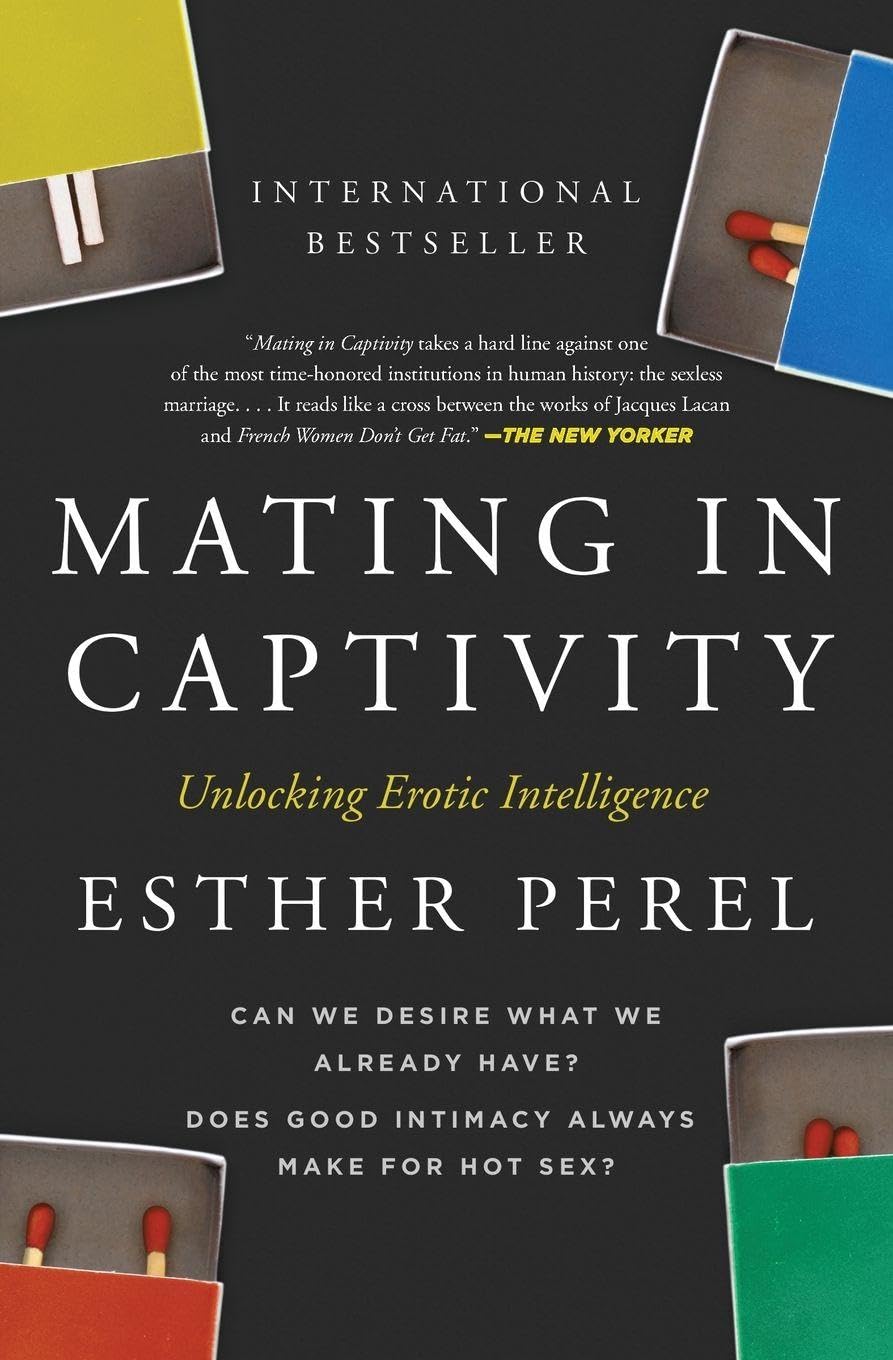 Mating in Captivity — Esther Perel
 The Ethical Slut — Janet W. Hardy & Dossie Easton
 The Five Love Languages — Gary Chapman
As an Amazon Associate I earn from qualifying purchases.