
Aftercare Basics for Intimate Encounters
Ordinary care after sexual closeness: body needs, a short check-in, and what to do when care is being misused.
SexualityExpert.com Editorial Team — general educational content for adult readers.

This article is general educational information only. It is not medical advice, not a diagnosis, and is not written by a doctor. This site is not a doctor and does not provide medical care. Nothing here is medical advice. Full disclaimer.
Aftercare Basics for Intimate Encounters
Picture Luis and Ren on a rainy Friday in Portland. The evening went the way they had agreed. Then Luis gets up immediately, checks a work email, and is confused when Ren goes quiet and small on the edge of the bed. Nobody broke a rule. Nobody is in danger. Something tender was left unfinished. This illustrative scene is what people mean by aftercare: the ordinary care you offer each other after sexual closeness, so nobody has to guess whether they are still welcome in the room.
Aftercare is not a special license, and it is not only for people who use particular labels. It is the twenty or forty minutes when bodies are tired, feelings are close to the surface, and a small kindness lands louder than it would at lunch. Skip it often enough and a partner learns that intimacy ends in abandonment, even when the sex itself was wanted.
Start with the body, because the body is loud
Thirst, low blood sugar, cold, and a full bladder can masquerade as sadness or irritability. Before you process the relationship, offer the simple things. Water within reach. A snack if either of you skipped dinner. A blanket. A trip to the bathroom without a joke at anyone's expense. A warm cloth if someone wants one, and privacy if they do not.
Ask before you touch. The fact that touch was welcome ten minutes ago does not mean an arm around a shoulder is welcome now. "Do you want to be held, or do you want a little space next to me?" is a complete question. Both answers are successful. Hovering while they try to answer is its own pressure.
Some people drop into a flat, tearful, or shaky state after sex even when the experience was consensual and good. Clinicians sometimes call a similar crash postcoital dysphoria. You do not need the label to respond well. You need to avoid taking the tears as a verdict on your performance. Say, "I'm here. You don't have to explain it yet." Then stay, unless they ask you to give them the room. If this crash happens often, or if it arrives with panic, flashbacks, or pain, a qualified clinician or therapist is the right next conversation. An article cannot tell those apart from a one-off wave of feeling.
A check-in that is not a performance review
Aftercare conversation has a purpose: to learn whether the person is alright and whether the agreement held. It is not the moment for a ranked review of technique, and it is not the moment to introduce a new request you were afraid to make earlier.
A light version, if both of you are soft and fine: "Anything you want me to know before we sleep?" Then stop talking. Let the answer be "no" without fishing.
A slightly fuller version, useful when the evening included something new:
- "Did anything cross a line we had set?"
- "Is there anything you want more of, or less of, next time?"
- "Do you need anything from me in the next hour that is not about sex?"
Keep your own answers short. If you need a longer talk, book it for tomorrow, with clothes on, the way the consent guide suggests for anything that is really a negotiation. Midnight is a bad courtroom.
You might be thinking that scheduling care makes it fake. A glass of water you planned for is not less kind than a glass you improvise. People with caring instincts still forget when they are tired. A tiny plan — water on the nightstand, phones left in the kitchen, a question you already know you will ask — survives the moment better than a fantasy of perfect spontaneity.
When you are not in the same place
Aftercare still applies when intimacy happened over a video call or a long thread of messages. The abruptness can be worse, because one person is suddenly alone in a room that did not change. Agree before you hang up how the ending will go. "We stay on the phone for ten minutes" is a plan. "Text me when you are under the covers" is a plan. Disappearing because you feel awkward teaches the other person that they are embarrassing. The long-distance habits piece is about the wider rhythm; the ending of a single call is part of that rhythm.
If you are the person who needs more care than your partner naturally offers, say the need at a neutral time. "After sex I get anxious if we go straight to our phones. Could we have ten minutes of actual contact first?" That is a request, not an accusation. If they mock it, you have learned something about safety, not about whether your nervous system is too much.
Care is not a leash
Aftercare can be misused. A person who withholds comfort until you agree to a round you do not want is not being nurturing. A person who insists on a long emotional processing session when you have said you are sleepy and need to stop talking is not being deep. Care respects the limit in front of it.
It can also be used to paper over a consent problem. If something happened that you did not agree to, tea and a cuddle do not close the file. You can accept the tea and still name what went wrong tomorrow, or tonight. If you are unsafe, leave if you can, and contact local emergency services. The National Domestic Violence Hotline, at 1-800-799-7233 or thehotline.org, can help you think through a situation that involves control, even when the control shows up as "care."
Solo aftercare counts too. People who are single, or whose partner is asleep, or who were sexual alone, still have a body that may want water, food, a shower, and a moment of not immediately scrolling. If body-related shame shows up in that quiet, the piece on body image and bedroom confidence is a better companion than a mirror lecture. If you want a human for a non-urgent question about this site, the contact page is there. It is not a crisis line.
What to skip
Skip the joke that makes your partner's vulnerability the punchline. Skip the instant photo unless you already have a clear yes for photos, including where they will live and when they will be deleted. Skip bringing up an old grievance because everyone is finally soft enough not to fight back. That is an ambush, not intimacy.
Skip grading yourself. "Was I good?" asked three times is a request that your partner manage your ego while they are trying to land. If you need reassurance, ask once, plainly, and accept the answer. Then get dressed, or don't, and rejoin the evening you actually have: a show, sleep, or a quiet kitchen. The glossary includes the plain-language terms around consent and care if you want shared vocabulary before the next conversation.
The question to take into your next evening is small enough to do tired: what will you put within arm's reach, and what one question will you ask, so the person beside you does not have to wonder if they are still held?
Questions about aftercare
Is aftercare only for rough or unusual sex? No. Any wanted sexual closeness can leave someone tender, and ordinary care still applies.
What if we want opposite things afterward? Say so ahead of time. One person can need quiet while the other needs contact, and you can take turns or sit near each other without talking.
What if I feel awful after sex I agreed to? You are allowed to feel that, and you are allowed to say stop next time. If it keeps happening, talk with a licensed therapist.
Where these ideas come from
The consent frame here follows Planned Parenthood's public teaching that agreement is specific and reversible, and RAINN's description of consent as conscious and ongoing. The National Domestic Violence Hotline (thehotline.org, 1-800-799-7233) is the right public resource when "care" is being used to control you. Postcoital dysphoria is a term used in sexual-medicine research for unexpected low mood after otherwise wanted sex; a clinician should sort out what is happening for you.
Adult education only. This is not medical or mental-health care, and it is not a safety plan. Limits are spelled out on the disclaimer.
Recommended on Amazon
 Come as You Are — Emily Nagoski
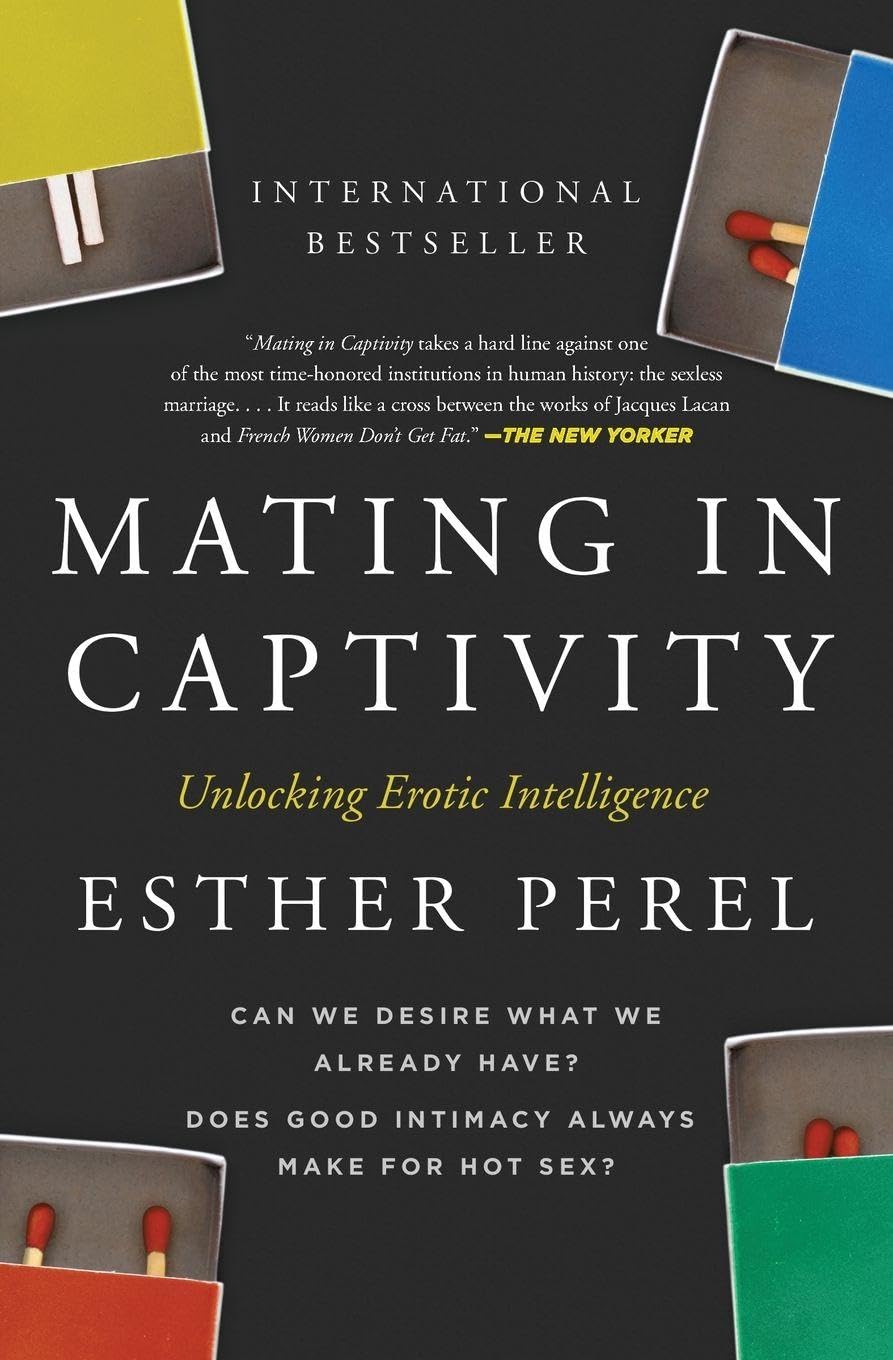 Mating in Captivity — Esther Perel
 The Ethical Slut — Janet W. Hardy & Dossie Easton
 The Five Love Languages — Gary Chapman
As an Amazon Associate I earn from qualifying purchases.